
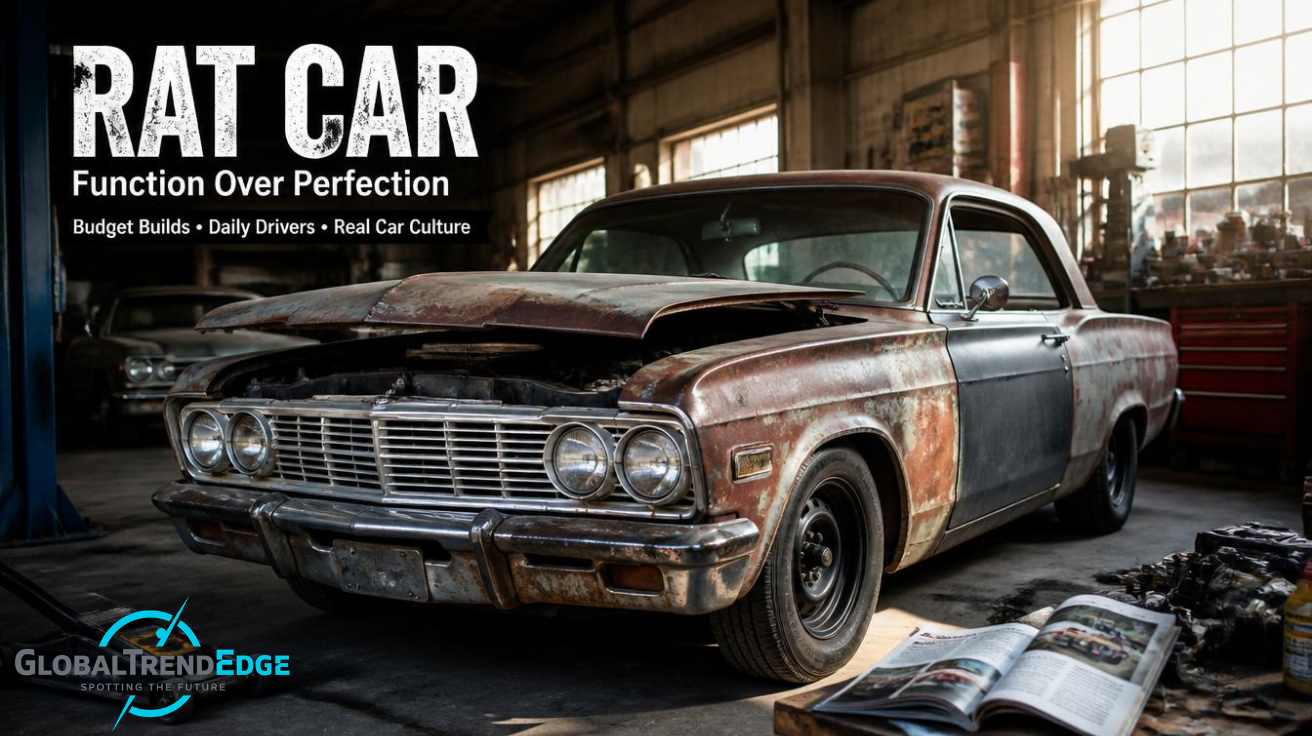
Rat Car: What It Is, How to Build One, and Why Gearheads Love Them
Introduction
Not every car on the road needs to be polished. Some of the most interesting vehicles you will ever see are deliberately rough, patched together from mismatched parts, painted with rattle cans or left to rust naturally, and driven hard every single day. These are rat cars, and there is a whole subculture built around them.
The term confuses some people because it overlaps with “rat rod,” a related but distinct thing in the hot rod world. Others stumble across the phrase while searching for a cheap project car or trying to understand what their neighbor is building in the driveway. This guide covers all of it: what a rat car actually is, where the concept comes from, how people build them, and whether this approach to car ownership is right for you.
What Is a Rat Car?
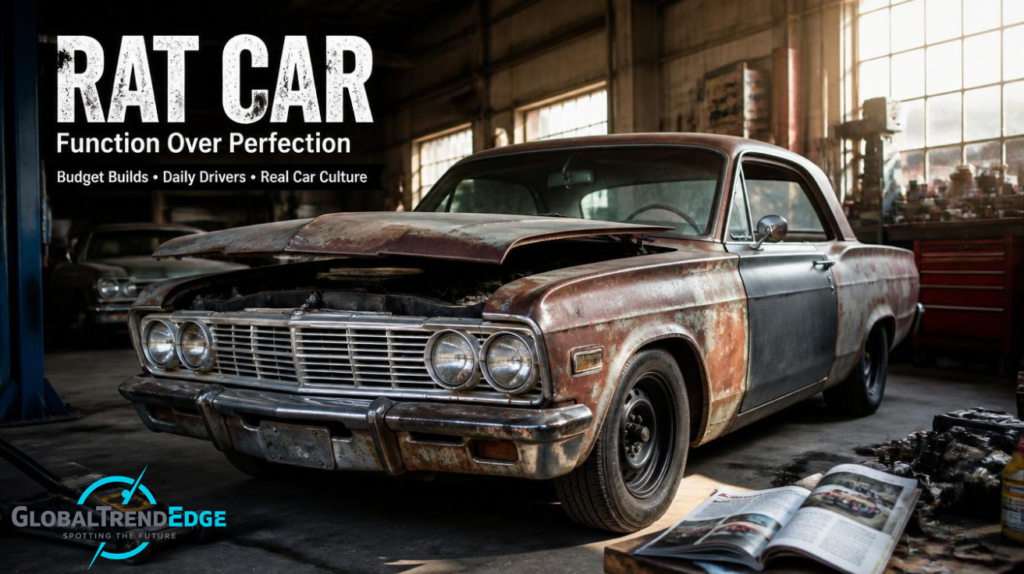
A rat rod is a vehicle that prioritizes function and personality over appearance. The owner typically keeps a car running and driving rather than spending money on cosmetic repairs. Rust might be left untreated. Body panels may not match. Repairs are often visible rather than hidden. Paint is whatever is available or simply absent.
The philosophy behind a rat car is simple: a car is a machine, not a showpiece. If it runs reliably and gets you where you need to go, dented fenders and surface rust are irrelevant. In some cases, the rough appearance is also intentional and even artistic, with owners leaning into the distressed look deliberately.
Rat cars are daily drivers. This is the key distinction that separates them from garage queens and show cars. Someone with a rat car is using it, often hard, and maintaining the mechanicals carefully while ignoring cosmetics entirely.
Rat Car vs. Rat Rod: Understanding the Difference
These two terms are related but not the same thing, and the distinction matters if you are trying to understand either community.
What Is a Rat Rod?
A rat rod is a hot rod built in the traditional pre-war or early postwar American custom car style but with a deliberately unfinished, gritty aesthetic. Rat rods are built for shows, cruises, and exhibitions as much as for driving. They often feature exposed engines, radical chassis modifications, vintage bodies on modern or modified frames, and a visual style that references the roughness and improvisational spirit of early hot rodding.
Rat rods are a recognized subgenre within the American hot rod and custom car hobby. They have dedicated shows, magazines, and communities. The aesthetic is intentional and carefully constructed to look rough, but the vehicles are often mechanically sophisticated.
How a Rat Car Differs
A rat car does not need to be a hot rod at all. It can be a 1998 Honda Civic with mismatched doors. It can be a pickup truck with a cracked windshield that has been repaired with clear tape and keeps running year after year. It can be a classic muscle car that never got the restoration it was promised and just kept getting driven.
What makes something a rat car is the owner’s attitude: keep it running; do not stress about looks; use it until it cannot be used anymore; and take a certain pride in the honesty of a vehicle that shows its life rather than hides it.
The History Behind the Rat Car Aesthetic
The rat rod philosophy has roots in working-class car culture. Before the postwar prosperity that made automobile restoration a hobby, most people simply kept their cars running with whatever was available. Improvisation was necessity, not style.
Early hot rodders in the 1930s and 1940s modified cars for speed using leftover and salvaged parts. Many of these builds looked rough because they were rough. The goal was performance, not appearance. This pragmatic tradition never entirely disappeared even as the custom car hobby became more polished and expensive.
By the 1990s and early 2000s, a backlash against the increasingly expensive and pristine world of show-car culture produced a renewed interest in rough, functional builds. The rat rod movement formalized this into an aesthetic, while the broader rat car philosophy spread through communities of practical car people who simply could not afford or did not care about glossy restorations.
Online forums, later YouTube channels, and eventually social media platforms gave this community visibility it had never had before. What was once just a private attitude toward car ownership became a recognized approach with its own vocabulary and community spaces.
Why People Build and Drive Rat Cars
The motivations vary, but several themes come up consistently in conversations within this community.
Cost
Maintaining a vehicle without cosmetic investment is significantly cheaper than maintaining one with it. A running car with surface rust and a dent in the quarter panel needs engine oil, tire rotations, and brake pads. It does not need paint correction, rust-proofing appointments, or touch-up work. For people who need transportation but have limited budgets, a rat-car approach makes practical sense.
Stress Reduction
People who drive polished cars often stress about every parking lot ding and bird dropping. Rate car owners frequently describe a freedom from that anxiety. When your car already has character, one more scratch is not a crisis. This attitude genuinely improves the daily experience of owning and driving an older vehicle.
Creative Expression
For many enthusiasts, the rat car is a creative project. Choosing mismatched colors, adding personal touches, welding on custom parts, or displaying the natural patina of rust and age is a form of self-expression. Some rat cars are genuine works of art in a way that a perfect factory restoration is not.
Environmental Perspective
Keeping an existing vehicle running rather than scrapping it for a new one has genuine environmental logic. Manufacturing a new car requires significant resources. A vehicle that can be maintained and kept on the road reduces demand for new production. Some rat car owners hold this perspective explicitly, though for most it is secondary to practical and aesthetic motivations.
Community
The rat car community is genuinely welcoming. Unlike some areas of the car hobby where money and perfection create hierarchy, rat car culture tends to value ingenuity, mechanical knowledge, and personality in a build over budget. This makes it accessible to people who love cars but do not have significant money to spend.
How to Build a Rat Car: A Practical Overview
There is no single way to build a rat car because there is no blueprint. The whole point is improvisation and personalization. That said, some practical guidance applies broadly.
Choosing a Base Vehicle
The best starting point is something mechanically sound with cosmetic issues. Rust on body panels is acceptable. Mechanical rust, meaning rust on structural components, subframes, or suspension parts, is a more serious problem and needs evaluation before purchase.
Popular rat car bases include older Japanese compact cars like Toyota Corollas and Honda Civics from the 1980s and 1990s, American trucks from similar eras, and classic American cars that are too rough for restoration but too good to scrap. The ideal rat car candidate runs, drives, passes a safety inspection, and costs little to acquire.
Prioritizing Mechanical Work
A rat rod needs reliable mechanicals. This is not negotiable. The aesthetic is secondary to actually driving the vehicle. Before doing anything cosmetic, address the following:
Engine health: oil leaks, cooling system condition, belt and hose condition, timing Brakes: pads, rotors, calipers, brake lines for corrosion Suspension: worn bushings, ball joints, tie rod ends, shocks and struts Tires: tread depth, age, condition Electrical: lights, charging system, critical safety systems
A rat car that looks perfectly rough but breaks down constantly is just a broken-down car. The community ethos is that the vehicle gets driven.
Decisions About Rust
Surface rust on body panels is generally cosmetic and progresses slowly. Many rat-car owners simply leave it and let it develop naturally. Some apply clear coat or rust converter to stabilize surface rust without changing its appearance significantly.
Structural rust is different. Rust in floor pans, frame rails, or suspension mounting points is a safety issue. Rat-car philosophy does not extend to driving an unsafe vehicle. Structural rust needs repair, even if that repair is welded plate steel that looks rough rather than a perfect restoration.
Paint and Finish Choices
Some rat car owners leave whatever original finish remains, including faded paint, primer patches, and bare metal. Others apply rattle-can paint, either a single flat or satin color over everything or deliberately mismatched panels. Truck bed liner coatings applied over the whole vehicle are popular because they are durable, cheap, and create a consistent, if unconventional, finish.
The main rule is that there are no rules. The finish should reflect the owner’s approach and what the vehicle actually needs.
Personal Touches and Modifications
This is where individual creativity enters. Common modifications in the rat car world include the following:
Welded-on custom touches like custom bumpers or rack mounts built from raw steel Exposed mechanical elements where trim or covers have been removed Interior modifications using salvaged, mismatched, or deliberately industrial materials Functional additions like external lighting rigs, cargo solutions, or tool storage Stickers, paint pen work, or other surface decoration
The modifications should add function or genuine personal meaning. Rat car culture has low tolerance for fake patina or artificially created distress, which is viewed as dishonest compared to genuine wear.
Famous and Notable Examples of Rat Car Culture
While individual rat cars are personal projects without much fame, several things in popular culture have brought the aesthetic to wider attention.
The Mad Max film franchise, particularly Mad Max: Fury Road (2015), presented a vision of post-apocalyptic vehicles that overlaps heavily with rat car and rat rod aesthetics. The vehicles in those films inspired a huge wave of builds worldwide.
The broader barn-find culture, where old cars are discovered and driven rather than immediately restored, shares DNA with rat car thinking. Barn find videos on YouTube routinely receive millions of views, suggesting widespread interest in the romance of rough, genuine vehicles.
Various online communities, including dedicated subreddits, Facebook groups, and YouTube channels, have built substantial audiences around rat car and beater car culture. Channels focused on buying and fixing cheap cars have introduced the concept to audiences who might not have encountered traditional car hobby media.
Key Takeaways
A rat rod is a vehicle driven for function with the owner’s focus on mechanical reliability rather than cosmetic condition.
The rat car differs from a rat rod, which is a specific hot rod aesthetic. A rat car can be any make, model, or era of vehicle.
The philosophy values practicality, creativity, and driving over appearances and monetary investment.
Building a rat car starts with a mechanically sound base. Cosmetics are secondary to safety and reliability.
Structural rust is a legitimate safety concern even within rat car culture. Surface rust on body panels is generally acceptable.
The community is welcoming and values ingenuity over budget, making it accessible to enthusiasts at any income level.
FAQ
Is a rat car the same as a beater? They overlap significantly. A beater is typically just a cheap, rough car someone drives without much investment or intention. A rat car often implies more active ownership: the driver takes pride in the vehicle’s roughness and makes deliberate choices about its appearance and function.
Are rat cars safe to drive? They can be. Safety depends entirely on mechanical condition, not cosmetic appearance. A race car with good brakes, sound structure, reliable steering, and proper tires is as safe as any vehicle. An unsafe rat car is just an unsafe car.
How much does it cost to build a rat car? This varies enormously. Some people acquire a base vehicle for a few hundred dollars and spend a few hundred more on mechanical work. Others invest several thousand in a more involved project. The whole point of rat car culture is that high budgets are not required.
Do rat cars pass inspection? This depends on the state or country and what specific condition the vehicle is in. Surface rust on body panels typically does not cause inspection failure. Structural rust, brake issues, lighting failures, and tire problems do. A race car built properly should pass inspection because mechanical condition is prioritized.
Can a new or newer car be a rat car? Technically yes in philosophy, though rat rod aesthetics are more common with older vehicles because age produces the worn character that defines the look. Some people apply rat rod thinking to newer vehicles they simply do not invest cosmetically in, but the community most often centers on older cars.
Where can I find a community of rat car enthusiasts? Reddit has active communities, including r/Ratrod and r/Beatercar. Facebook groups dedicated to rat cars, rat rods, and beater vehicles have large memberships. YouTube channels focused on cheap car builds also cultivate active comment communities.
What vehicles are most popular for rat rod builds? There is no strict answer, but older trucks (particularly pre-1990s American pickups), classic American cars from the 1960s and 1970s, and reliable Japanese compacts from the 1980s and 1990s are commonly seen. Popularity often comes down to parts availability and cost of acquisition.
Conclusion
A rat car is, at its core, an honest vehicle. It shows what it is, does what it does, and asks nothing more than that you keep it running. In a car culture that often equates value with perfection, there is something refreshing about a community that finds value in the opposite: character, function, creativity, and the simple act of driving.
Whether you are looking for a cheap daily driver, a creative project, or just an entry point into car culture that does not require a large budget, the rat car world is worth exploring. The standards are mechanical, not cosmetic. The community is open. And the vehicles, rust patches and all, tend to have more personality than anything fresh off a showroom floor.




[…] What Is a Rat Car? DIY Builds, Culture, & Mechanisms […]