
QtWeather: Complete Guide to Its Meaning, Features, and Use Cases
Introduction
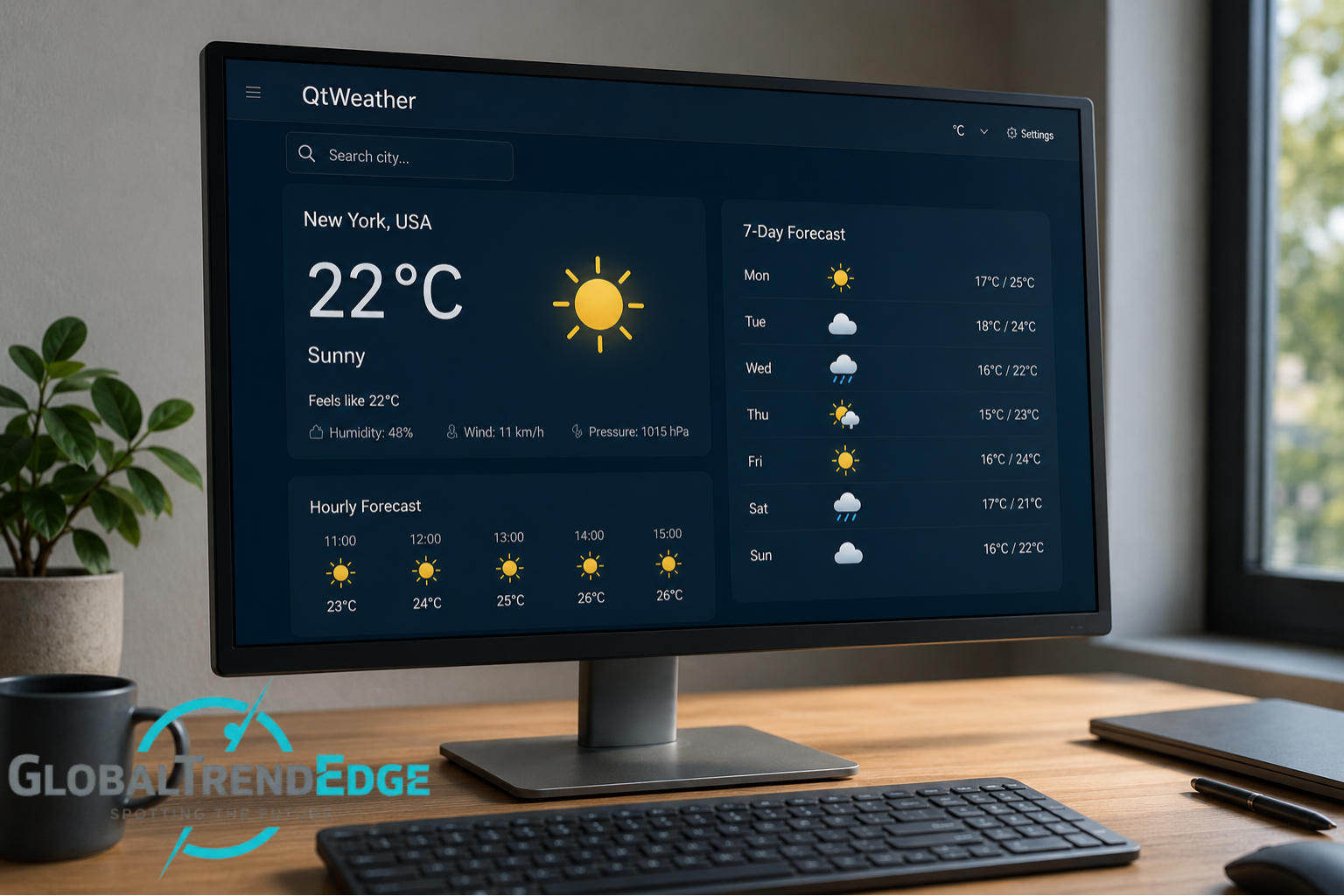
The term QtWeather is not tied to a single widely recognized official product. Instead, it is commonly used to describe weather applications, widgets, or projects built using the Qt framework, a popular cross-platform software development toolkit.
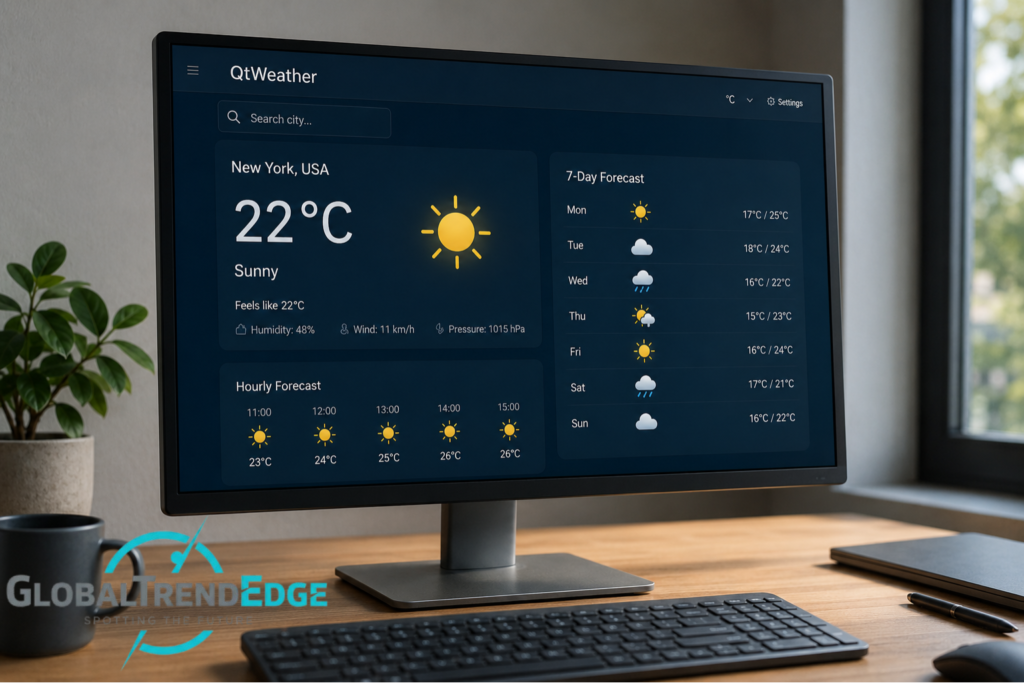
In simple terms, QtWeather usually refers to a weather app or weather UI component created with Qt, designed to show real-time weather data using external APIs. These apps are often lightweight, customizable, and compatible with multiple operating systems.
To understand QtWeather properly, it is important to first understand the technology behind it, Qt.
Qt is a powerful framework used to build desktop, mobile, and embedded applications using C++ and QML.
What Is QtWeather?
QtWeather generally refers to:
- A weather application built using Qt
- A weather widget integrated into Qt-based software
- A demo project showing API integration with weather services
- A custom UI project for learning Qt development
It is not a single official app but rather a concept used in multiple developer projects.
How QtWeather Works
QtWeather applications typically follow a simple structure:
1. Weather Data Source (API)
Most QtWeather apps use external APIs, such as:
- OpenWeatherMap API
- WeatherAPI
- AccuWeather API
These APIs provide:
- Temperature
- Humidity
- Wind speed
- Weather conditions (sunny, rainy, cloudy)
2. Qt Front-End Interface
The Qt framework handles the user interface:
- Desktop widgets
- Mobile UI (Android/iOS)
- Embedded device displays
3. Data Processing Layer
The app converts API data into readable formats:
- Celsius/Fahrenheit conversion
- Weather condition mapping
- Forecast display logic
Key Features of a QtWeather App
Real-Time Weather Updates
QtWeather apps fetch live weather data from online APIs.
Cross-Platform Support
Because of Qt, the same application can run on:
- Windows
- Linux
- macOS
- Android
Customizable UI
Developers can design:
- Minimal dashboards
- Animated weather icons
- Dark/light themes
Lightweight Performance
Qt-based apps are often faster and consume fewer resources.
Why Developers Use Qt for Weather Apps
Qt is widely used because it offers the following:
- Strong UI design tools (Qt Quick / QML)
- Fast C++ performance
- Easy API integration
- Multi-platform deployment
This makes it ideal for small utility apps like weather dashboards.
Common Use Cases of QtWeather
Personal Desktop Widgets
Users display weather on their desktop screen.
Embedded Devices
Used in:
- Smart mirrors
- IoT dashboards
- Car infotainment systems
Learning Projects
Beginners use QtWeather projects to learn:
- API handling
- UI design
- C++ development
Example Features in a QtWeather Project
A typical QtWeather project may include the following:
- City search functionality
- 5-day forecast display
- Weather icons animation
- Location-based weather detection
- Temperature charts
Limitations of QtWeather Projects
While useful, these projects may have limitations:
- Requires API key (sometimes limited free usage)
- Internet connection needed
- Manual setup for beginners
- No single official standard implementation
FAQ – QtWeather
1. Is QtWeather a real official app?
No, QtWeather is not a single official application. It is a general term used for Qt-based weather projects.
2. What is Qt used for in QtWeather?
Qt is used to build the user interface and application logic.
3. Do QtWeather apps work offline?
No, they require internet access to fetch live weather data.
4. Can beginners build a QtWeather app?
Yes, it is a common beginner project for learning Qt and API integration.
5. Which API is best for QtWeather projects?
OpenWeatherMap is one of the most commonly used APIs for such projects.
Conclusion
QtWeather is best understood as a concept rather than a single product. It represents weather applications built using the Qt framework, combining API-based weather data with cross-platform UI design.
For developers, it is a practical and educational project that demonstrates how to build real-world applications using modern tools and APIs.




[…] QtWeather Explained: Features, Uses & Development Guide […]