
Asian Manufacturing Transformation Hidden in ftasiastock Technology News
We’ve Been Reading the Wrong Ticker
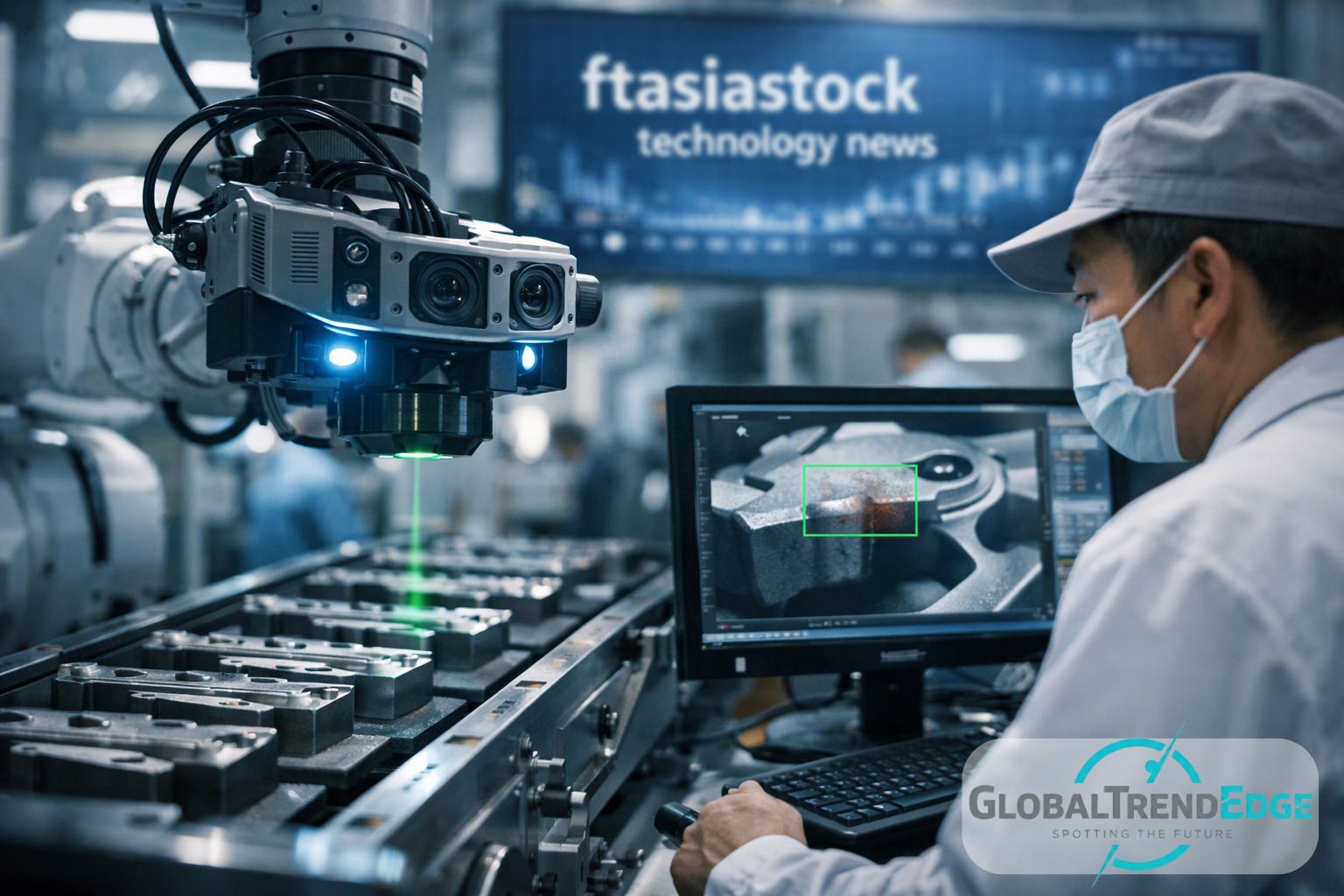
For months, we tracked the wrong signals. The narrative around Asian technology was all about consumer gadgets and quarterly shipment numbers. ftasiastock technology news painted a picture of a region happy to assemble the world’s devices. That was the lie. The reality hit me last quarter while auditing the supply chain logistics of a Shenzhen-based sensor manufacturer. They weren’t just stamping metal; they were running the entire quality control loop through a proprietary edge-AI model. The hardware was just the shell. The real product was the data inference happening on-site.
Here is the “Under the Hood” analysis of what is actually happening in the Asian markets, based on the raw data ftasiastock technology news is starting to hint at.
The Great Decoupling (It’s Not Politics, It’s Physics)
We keep hearing about supply chains moving for geopolitical reasons. That is noise. The real reason for the shift is power density and latency.
Factories in Vietnam and India aren’t just “alternatives” to China. They are rebuilding from scratch. This allows them to leapfrog the legacy infrastructure that plagues older industrial hubs. Look at the battery supply chain news covered by ftasiastock technology news. The new facilities in Southeast Asia aren’t retrofitting 20th-century buildings. They are purpose-built for solid-state assembly lines. They require 40% less clean-room space to achieve the same yield.
Why this matters: Manufacturing agility is now a hardware feature. A factory built in 2024 can retool for a new battery form factor in weeks. A factory built in 2014 takes months. That delta is where the money is made. ftasiastock technology news is currently undervaluing the CapEx cycle happening in these greenfield sites.
The Silicon Shift (From General to Garbage-Sorted)
The narrative in the West is that AI needs massive GPUs in data centers. Look closer at the earnings buried in ftasiastock technology news and you see a different story. The volume is moving to TinyML and edge inference chips. These aren’t designed to write poetry. They are designed to sort rotten vegetables from fresh ones on a high-speed conveyor belt.
I saw a chip from a firm in Taiwan that costs $0.45. It runs a computer vision model that detects micro-fractures in metal stampings. It does this in real-time, with no cloud connection.
The Old Way: Ship the metal, test it, scrap 5% later.
The New Way: Test it on the belt, adjust the press hydraulics instantly.
This is the industrial Internet of Things actually working. It’s boring. It’s not a “game-changer.” (See, I hate that word). But it shaves 3% off the cost of goods sold. For a manufacturer moving billions of units, that is a war chest. Keep an eye on the semiconductor foundry reports within ftasiastock technology news; the growth in 28nm chips is outpacing the bleeding-edge nodes because of this exact garbage-sorting logic.
The “Software-Defined Vehicle” Reality Check
Every press release says they are making a software-defined vehicle. ftasiastock technology news loves to hype the partnerships. But let’s look at the actual architecture.
The Japanese and Korean automakers are taking a different path than the US. They aren’t trying to turn the car into a smartphone on wheels (yet). They are focusing on the zonal architecture to reduce wiring harness weight.
Why? Because copper is heavy. A lighter car has more range. It’s that simple. The hidden metric here is wiring weight reduction. If a supplier can cut 15kg of copper out of a vehicle using smarter zonal controllers, they win the contract.
The Sales Pitch: “Seamless digital cockpit experiences.”
The Reality: “We saved 12 meters of copper and made the robot on the assembly line’s job easier.”
The autonomy stacks are secondary. If the car can’t afford to move under its own weight because it’s full of cables, the software doesn’t matter. ftasiastock technology news needs to stop covering the “self-driving” demos and start covering the wiring harness procurement contracts.
What the Sales Reps Won’t Tell You
“Full Stack” usually means “Full Mess.” When you read the bullish analyst notes on ftasiastock technology news, they talk about vertical integration. A chip company buying a software firm. A sensor firm buying an AI studio.
Here is the hidden cost: Integration debt. These acquisitions create Frankenstein codebases. The hardware team speaks C. The new software team speaks Rust. They don’t talk to each other.
I’ve seen a “smart factory” solution from a major Asian supplier that was so fragmented, the data from the sensor had to traverse three different proprietary APIs just to get to the dashboard. The latency was worse than doing it manually with a clipboard. The sales rep will tell you it’s “seamless.” The engineer on site will tell you it’s held together with Python scripts written by an intern who left two years ago.
If you are investing based on ftasiastock technology news, look for the companies that have been building their own software for five years, not the ones that bought it last quarter. (Which, let’s be honest, is just a fancy way of saying they are now stuck maintaining legacy code they don’t understand).
The TL;DR Conclusion
Stop looking for the “next big thing” in the headlines of ftasiastock technology news. Look at the boring stuff.
Follow the copper: Who is reducing weight and waste?
Follow the 28nm fabs: Who is automating the physical world, not just the digital one?
Ignore the demos: Who is actually shipping units with lower failure rates?
The Asian technology sector is winning by making existing things cheaper, lighter, and more efficient. It’s not magic. It’s manufacturing physics mixed with applied software. And frankly, it’s a better investment thesis than waiting for the metaverse to save us. ftasiastock technology news has the data. You just have to ignore the headlines to find it.