

Stop Calling It “BPA Cyber Security.” It’s Not a Product.
We’ve been sold a lie about Business Process Automation (BPA) and security. Vendors slap “cyber security” onto their BPA platforms like a compliance sticker. I realized this during a post-mortem for a breach that originated in a seemingly innocuous automated invoice approval workflow. The automation worked perfectly. It just funneled malicious payloads directly into our core financial systems faster than ever.

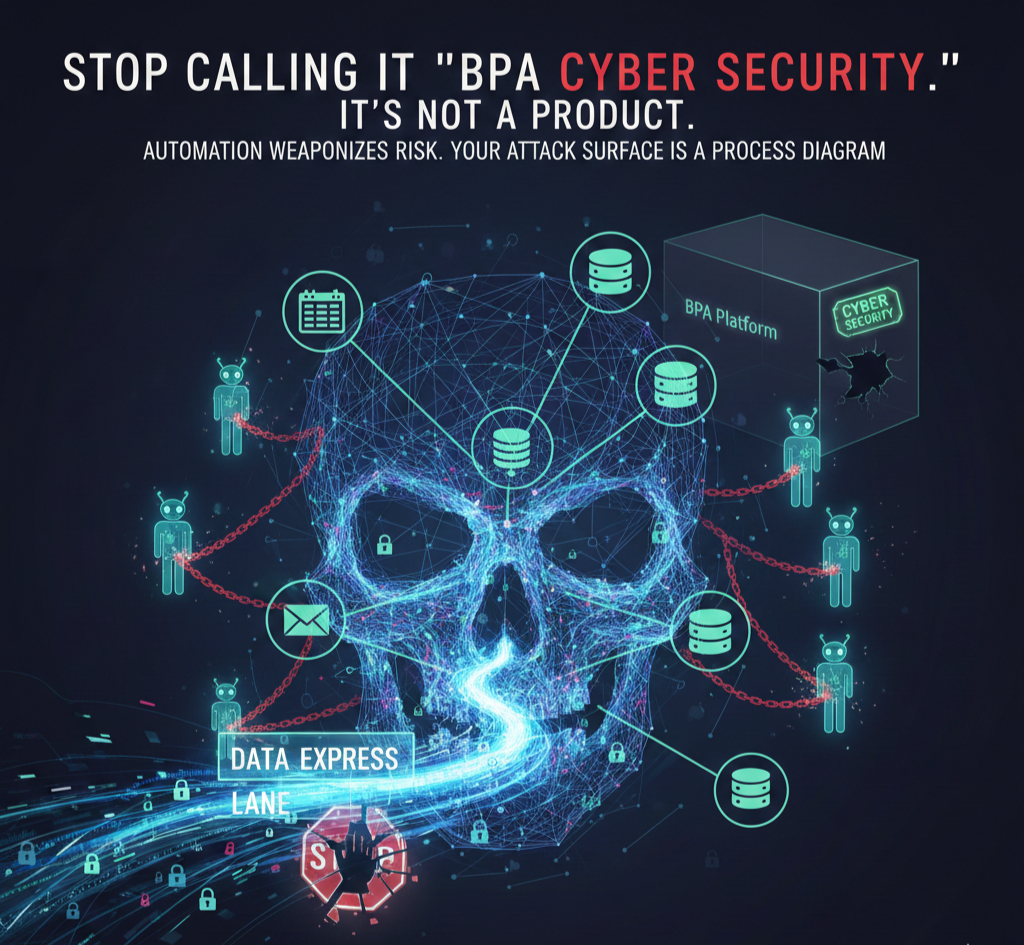
The real story isn’t about buying a “secure” BPA tool. It’s about how automation fundamentally changes your attack surface. Here’s what’s actually happening under the hood.
The Shift from Human to Machine Identity Sprawl
Your IAM policy is obsolete. Every automated workflow, bot, or integration is a new non-human identity with privileges. We’ve moved from managing hundreds of user accounts to managing tens of thousands of machine-to-machine handshakes. Each one is a potential credential leak or privilege escalation path. The future of access isn’t about people. It’s about service account governance. If you’re not auditing these permissions with the same rigor as domain admin rights, you’re already exposed.
The Blind Spot of Converged Data Flows
BPA consolidates data from multiple sources into single pipelines. This creates a high-value “data express lane” for attackers. A low-privilege workflow accessing a public SharePoint library can be chained to export that data to an unsecured Azure Blob Storage container. The individual systems were secure. The process created the vulnerability. Security tools that monitor discrete systems are blind to this. You now need to map and monitor process-level data lineage.
The Irreversible Action Problem
A human can be told “stop!” An automated process, once triggered, executes. At scale. A compromised workflow can disable accounts, exfiltrate data, or corrupt records across your entire environment in seconds. The damage is done by the time your SIEM alerts. The focus shifts from prevention to execution integrity and instant kill switches. Can you truly halt all instances of a workflow in under 10 seconds? (Most platforms can’t. Not without breaking everything else.)
What the Sales Reps Won’t Tell You
The hidden cost is architectural lock-in. That proprietary BPA platform with “baked-in security”? Its native logging is often insufficient for forensic needs. You’ll need to build custom log shippers to your SIEM, assuming the platform exposes the right data. The security you’re sold is often a veneer. Real monitoring becomes a custom integration project they’ll gladly sell you as “professional services.” Which, let’s be honest, is just a way to bill you for the features the product should have had.
TL;DR: BPA doesn’t introduce new vulnerabilities; it weaponizes existing ones at machine speed.
Stop evaluating BPA security features. Start auditing the privileged identities and data conduits your automation creates. Your attack surface is now a process diagram.